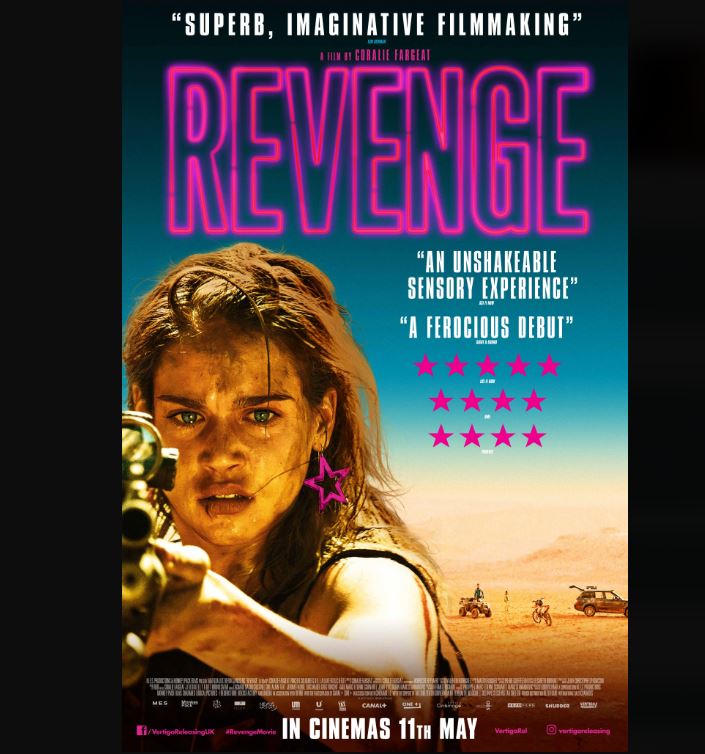
Revenge (2017), directed by Coralie Fargeat, is a modern masterpiece in the rape-and-revenge genre that stands out for its bold visual style, feminist themes, and relentless intensity. This French action-thriller redefines the boundaries of survival cinema, delivering a blood-soaked, empowering tale that is as shocking as it is cathartic.
Plot Overview
The story follows Jen (Matilda Anna Ingrid Lutz), a young woman who joins her wealthy, married lover Richard (Kevin Janssens) for a romantic getaway in a luxurious desert villa. Their idyllic retreat is shattered when Richard’s two hunting friends, Stan (Vincent Colombe) and Dimitri (Guillaume Bouchède), arrive unexpectedly. What begins as a weekend of indulgence quickly spirals into a nightmare of betrayal, violence, and survival.
After a horrific act of sexual violence, Jen is left for dead in the vast desert. But she survives, transforming from victim to avenger. Armed with nothing but her wits and a fierce will to live, Jen turns the tables on her attackers, hunting them down one by one in a brutal, cathartic quest for justice.
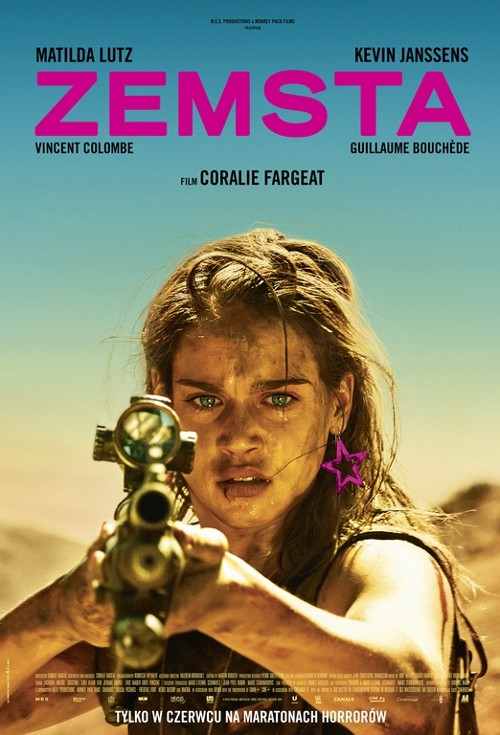
Cast and Performances
- Matilda Anna Ingrid Lutz delivers a powerhouse performance as Jen, portraying her transformation from a seemingly vulnerable woman to a relentless warrior with raw physicality and emotional depth.
- Kevin Janssens embodies the manipulative and controlling Richard with chilling precision, making him a truly detestable antagonist.
- Vincent Colombe and Guillaume Bouchède round out the cast as the predatory friends, adding to the film’s toxic masculine atmosphere.
Direction and Cinematography
Coralie Fargeat’s direction is audacious and unflinching. Working with cinematographer Robrecht Heyvaert, she crafts a high-contrast, neon-drenched hellscape that mirrors the film’s themes of danger and rebirth. The visuals are both beautiful and brutal, with each frame dripping with symbolism and style. The desert landscape becomes a character in itself, emphasizing Jen’s isolation and resilience.
Themes and Symbolism
Revenge (2017) is much more than a simple revenge tale. It’s a story of empowerment, survival, and the reclaiming of agency. The film flips the traditional male-dominated revenge formula, turning the victim into the victor and pain into power. Themes of rebirth, feminine strength, and the catharsis of violence are woven throughout, making it a deeply subversive and thought-provoking experience.
Cinematic Highlights
- Stylish Violence: The film’s violence is graphic and unrelenting, but it serves a purpose, symbolizing Jen’s transformation and the catharsis of her revenge.
- Desert Survival: The harsh desert environment mirrors the film’s themes of isolation and human cruelty.
- Female Empowerment: Jen’s journey from victim to avenger is a powerful statement on feminine strength and resilience.
- Practical Effects: The film uses practical effects and symbolism to enhance its visceral impact, making the violence feel real and impactful.

Release and Reception
Revenge (2017) premiered at the Toronto International Film Festival in 2017 and was released theatrically in 2018. It received critical acclaim for its bold direction, strong performances, and unapologetic style. The film is rated R for graphic violence, nudity, and strong language, and is available on streaming platforms like Shudder, Netflix, and Amazon Prime.
Final Verdict
Film Review – Revenge (2017) is a bold, visually stunning, and blood-soaked action-thriller that redefines the survival genre. Coralie Fargeat’s direction, Matilda Anna Ingrid Lutz’s powerful performance, and the film’s unflinching exploration of empowerment and catharsis make it a must-watch for fans of intense, feminist cinema. If you can stomach the graphic violence, Revenge (2017) is an unforgettable experience that will leave you both shocked and inspired.

Revenge (2017) is a stylish, intense, and unapologetically violent thriller. The bold direction and cathartic story make it a must-watch for fans of the genre.