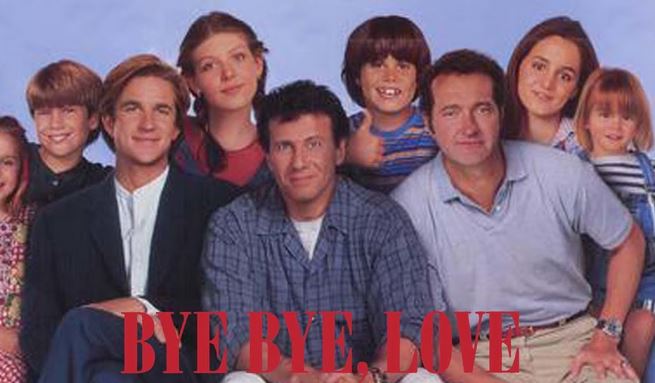
Bye Bye Love is a 1995 American comedy-drama directed by Sam Weisman, written by Gary David Goldberg and Brad Hall, and starring Matthew Modine, Randy Quaid, and Paul Reiser.
The film centers on the lives of three divorced men—Dave Goldman (Modine), Vic D’Amico (Quaid), and Donny Carson (Reiser)—as they navigate the complexities of single parenthood, new relationships, and the lingering emotional scars left by divorce.
The movie was released at a time when divorce and its social impact were increasingly prominent topics in American culture, and Bye Bye Love attempts to capture the bittersweet reality of post-divorce life with a mix of humor, pathos, and insight.
Plot Overview
The narrative unfolds through the interconnected stories of the three main characters, each representing a different facet of the divorced father experience. Dave is a somewhat immature, womanizing type who struggles to commit to his new girlfriend, Kim (Maria Pitillo), while still dealing with the emotional fallout from his divorce. Vic is a more cynical, emotionally wounded man whose blind date with Lucille (Janeane Garofalo) becomes a comedic highlight of the film, showcasing the awkwardness and vulnerability that often accompany dating after divorce. Donny, meanwhile, is a man still deeply in love with his ex-wife and unable to move on, even as his teenage daughter (Mae Whitman) grows increasingly frustrated with his inability to accept the new reality.
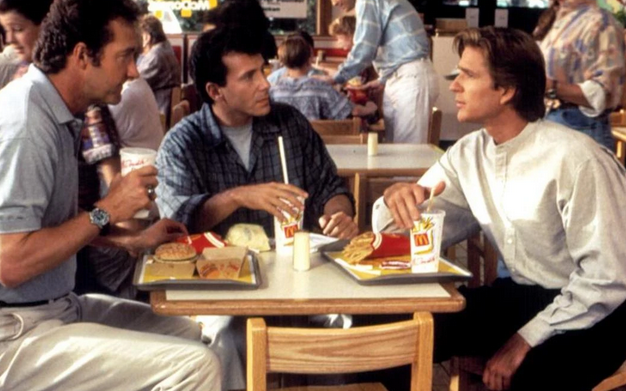
The film is structured as a series of vignettes, each focusing on the challenges faced by the protagonists: the awkwardness of meeting ex-spouses at McDonald’s to exchange children, the difficulties of dating after years of marriage, and the emotional toll of watching one’s children grow up in a fractured family. Alongside these main stories, the film introduces several subplots involving other characters, including a homeless teenager (Johnny Whitworth) and an elderly man (the late Flanders), both of whom serve to highlight the broader social issues that often accompany divorce, such as homelessness and isolation.
Themes and Tone
At its core, Bye Bye Love is a film about the emotional aftermath of divorce, particularly as experienced by men. The movie explores themes of loneliness, identity, and the struggle to rebuild one’s life after the end of a significant relationship. It also touches on the impact of divorce on children, showing how the dissolution of a family affects not just the adults but also the younger generation caught in the middle.
The tone of the film is a mix of comedy and drama, with moments of genuine humor balanced by scenes of quiet sadness and introspection. The screenplay by Goldberg and Hall is witty and often poignant, capturing the everyday absurdities and heartbreaks of post-divorce life. However, some critics have noted that the film occasionally veers into sitcom territory, with certain scenes feeling more contrived than authentic. The inclusion of a blathering radio psychologist (Rob Reiner) as a recurring character is particularly divisive, with some viewers finding his presence amusing and others seeing it as a heavy-handed device.
Performances
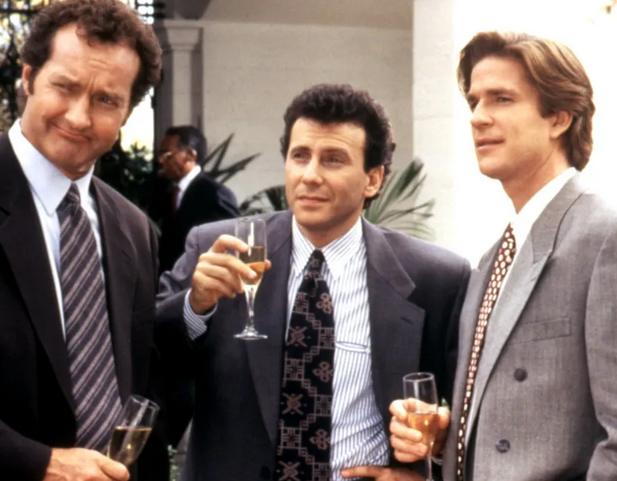
The performances in Bye Bye Love are generally strong, with the three leads each bringing a distinct personality to their roles. Matthew Modine is charming and relatable as Dave, capturing the character’s mix of immaturity and vulnerability. Randy Quaid is especially memorable as Vic, whose blind date with Lucille is one of the film’s standout sequences. Janeane Garofalo delivers a standout performance as Lucille, bringing a neurotic yet endearing energy to the role that elevates the film’s comedic moments.
Paul Reiser is also effective as Donny, portraying the character’s emotional struggles with nuance and depth. The supporting cast, including Amy Brenneman as Dave’s ex-wife and Mae Whitman as Donny’s daughter, also contribute solid performances that add to the film’s overall sense of authenticity.
Personal Opinion
I just finished watching Bye Bye Love and I have to say it left me with a bittersweet smile on my face.
It’s not a life-changing movie or anything like that, but it’s one of those that makes you nod your head thinking, “Damn, yeah, this really happens.”
As someone who has dealt with divorced friends and even a couple of similar situations in my own family, I totally identified with the whole thing about single parents dealing with ex-wives, awkward dates, and kids who look at you like you’re a walking disaster.
Speaking of tone, there are some really funny moments, like Quaid’s date or the kids’ antics, but also scenes that make you stop and think, like when Donny talks about how much it hurts to lose your family.
Visually, it’s not amazing. It’s a low-budget film, shot in Los Angeles with that 90s aesthetic. I love the look of 90s movies: muted colors, pop-rock music in the background (there’s a Cars song that fits perfectly), and zero special effects.
What I didn’t like as much: some subplots are unnecessary, like the homeless kid or the old guy; they seem shoehorned in to “deliver a message.” And the ending is predictable, one of those that ties up loose ends so everyone can live happily ever after, but without being completely cheesy.